
Empowering Families with Welsh Language Tools
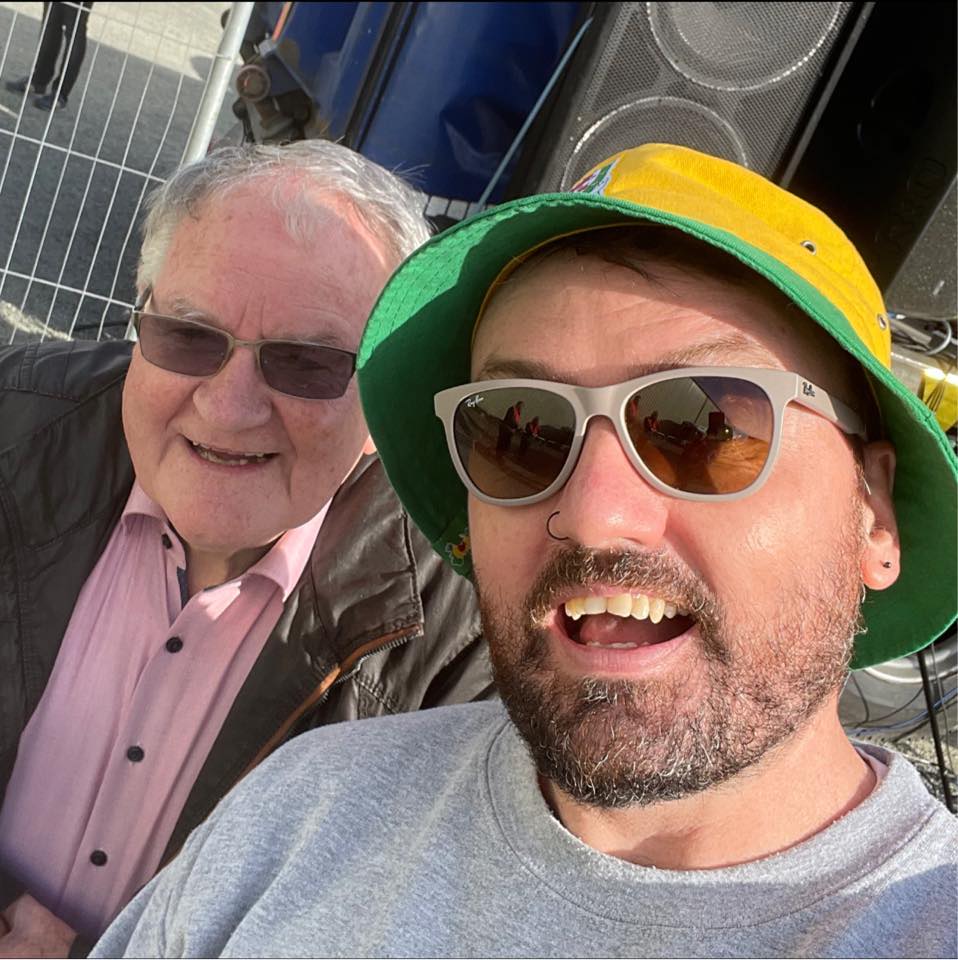
Croeso. I’m James, founder of Cam Cyntaf. I set this website up to support parents whose children are learning through Welsh, championing bilingual education, Welsh culture, and the Cymraeg 2050 vision of a language that belongs to us all.
A small story that became a bigger one
In 2016, I travelled to France with thousands of others to follow Wales at the Euros. It was one of the best times of my life. And somewhere in the middle of it, surrounded by Welsh voices and Welsh songs, I felt a quiet shame. I didn’t speak Welsh. Not really. And it suddenly mattered.
I came home determined to learn. And then, like a lot of good intentions, it sat on a shelf for a while.
The real first step
The push came a few years later, when my wife and I were choosing a school for our eldest daughter, Amelie. We knew we wanted her to go to a Welsh-medium school and I knew that if I didn’t start learning Welsh now, I’d be left waving from the touchline of her education forever.
So in September 2019, two things happened: Amelie started school, and I started Say Something in Welsh. It was a game-changer. For the first time, Welsh stopped being a thing I was afraid of (mutations! grammatical terms I didn’t even know in English!) and became something I was actually doing.
How music opened the door
Around the same time, I was listening to Elis James and John Robins on BBC Radio 5 Live when Elis played a track by Alffa. Then Adwaith. Then Los Blancos. My record collection at the time was stuck in the 90s and 00s but suddenly, here was a whole new world of Welsh-language music that sounded like everything I already loved, only in a language I was trying to learn.
I started a podcast with my friend Neil Collins about Welsh music, imaginatively called Welsh Music Podcast | Podlediad Miwsig Cymreig to share old and new Welsh music with anyone who’d listen. Through it, we’ve interviewed some of the giants of the Welsh music scene and Neil’s even written a book.
Music turned out to be the best Welsh teacher I could have asked for. It taught me how people actually speak. Not the textbook stuff, but the language of the street, the linguistic differences between gogs and hwntws, the words and phrases people actually use. Reading lyrics on Spotify while listening became a daily habit. My Welsh today is a glorious mongrel of phrases I’ve picked up from bands across Wales. Not to mention a few from Pobol y Cwm, my favourite S4C show.
What I learned along the way
Two things became clear as the years went on.
The first: Welsh is not something I was learning from the outside. Mae’r Gymraeg yn perthyn i ni gyd. Welsh belongs to all of us in Wales. I’d just been told a story about myself, growing up, that suggested otherwise. Learning Welsh wasn’t borrowing someone else’s language. It was reclaiming my own.
The second: I’d missed so much. Welsh history barely featured in my school days. I didn’t know about the drowning of Capel Celyn, or the Cymdeithas yr Iaith protests on Trefechan Bridge. And nothing about Saunders Lewis, Eileen Beasley, Gwynfor Evans or any of the people who fought, and still fight, for the language to thrive. Discovering all of this didn’t just teach me Welsh. It rooted me in Wales in a way I hadn’t been before.
Why Cam Cyntaf exists
The best thing about all of this? Sharing it with my daughters. Concerts. Festivals. Songs in the car. A da iawn when they do something well. A nos da at bedtime. It feels like a gift I get to give them every single day, and one they give back, often correcting my pronunciation as they go.
But I also know how lucky I was. I stumbled onto music, onto a course that worked, onto a community. A lot of parents who choose Welsh-medium education don’t get those lucky breaks. They feel out of their depth, worried about homework, unsure how to support a child whose school day happens in a language they’re still learning themselves.
What we believe
- Welsh belongs to all of us. Wherever you are on your journey. Whether you grew up with the language or are starting from scratch this term, you have a claim on it. The Welsh Government’s vision of a million Welsh speakers by 2050 only works if it includes parents like me, and like you.
- You don’t have to be fluent to be part of this. Small, consistent moments at home. A bore da, a diolch, a song in the car, do more than you’d think. Your child doesn’t need a perfect Welsh-speaking parent. They need a parent who shows up.
- No parent should feel alone in this. Welsh-medium education is growing every year, and so is the community of families navigating it. Cam Cyntaf exists to make that community easier to find.
- The language lives in our culture. Music, history, food, eisteddfodau, nosweithiau llawen, Dydd Gŵyl Dewi, the small everyday rituals. These aren’t decoration. They’re the language. We want to share them all.